Vema Limpet
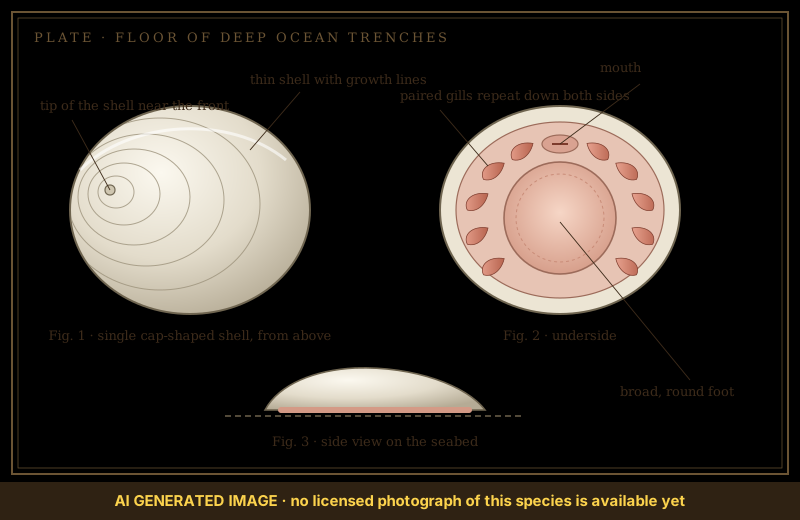
The Vema limpet (Vema ewingi) is a deep-sea monoplacophoran, a rarely seen mollusc with a cap-shaped shell. It was dredged from the Peru-Chile Trench, and belongs to a group that was known as fossils before living animals were found.
The Vema limpet (Vema ewingi) is a deep-sea monoplacophoran, a rarely seen mollusc with a cap-shaped shell. It was dredged from the Peru-Chile Trench, and belongs to a group that was known as fossils before living animals were found.
🧬 Field Guide Specimen: Open Vema Limpet in the CRV Science Field Guide to log the specimen, see its place among the Lophotrochozoa lineages in the Cladogram Explorer, and test your recall in the Red List conservation game.
Relatives of Neopilina
Monoplacophorans have a single cap-shaped shell and repeated sets of muscles and gills. Several genera live in the deep sea, and Vema was described from specimens brought up by the research ship Vema. See Neopilina.
Image Note
No licensed photograph of this species was available, so the Field Guide uses a clearly labeled illustration.
Why They Matter
Living monoplacophorans help to show what early molluscs may have looked like. See Chambered Nautilus.
Vema Limpet at a Glance
| Property | Value |
|---|---|
| Scientific name | Vema ewingi |
| Kingdom | Animalia |
| Phylum | Mollusca |
| Class | Monoplacophora |
| Order | Tryblidiida |
| Family | Neopilinidae |
| Field Guide group | Lophotrochozoa: Mollusca (Mollusks) |
| Diagnostic feature (Field Guide) | Small, thin, cap-shaped single shell from deep ocean trenches; underneath, several pairs of gills repeat along both sides of a round foot. |
| Class | Monoplacophora |
| Habitat | Deep sea |
See Also
- Neopilina — the first living monoplacophoran
- Antarctic Laevipilina — another monoplacophoran