Chambered Nautilus
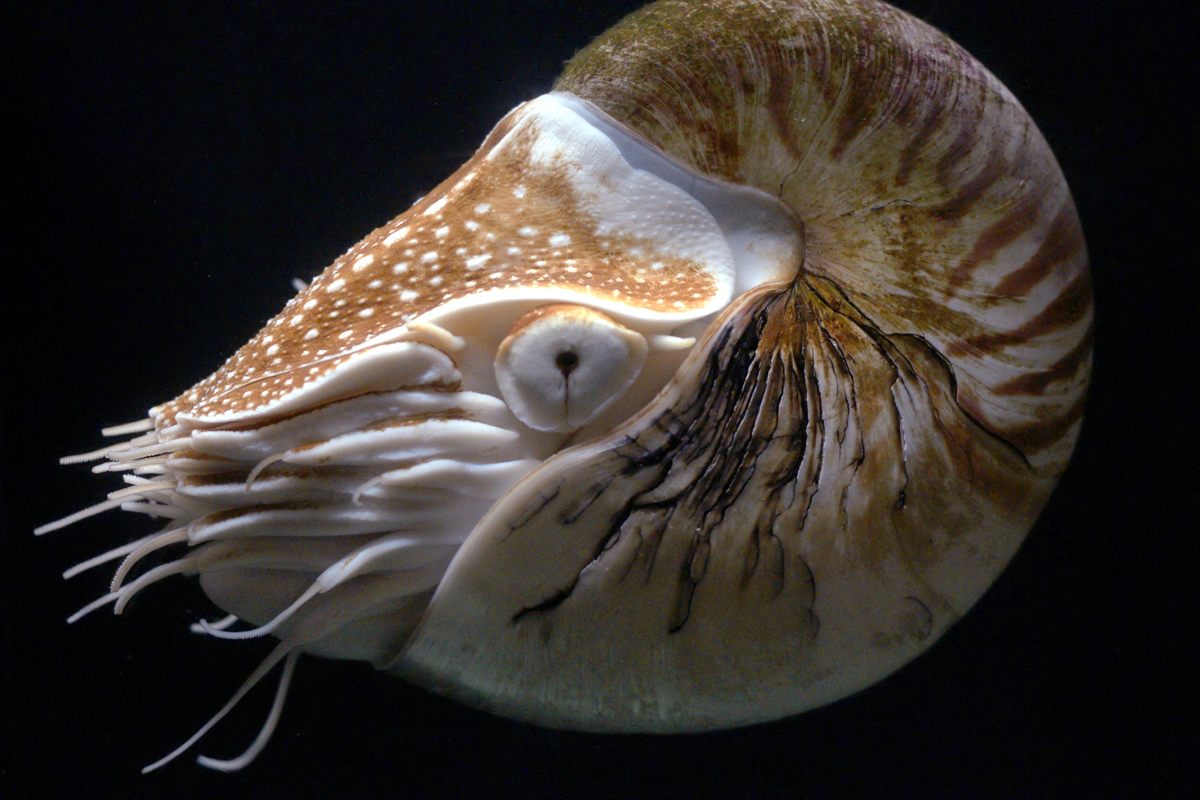
The chambered nautilus (Nautilus pompilius) is a cephalopod with a coiled, chambered external shell, found around Indo-Pacific reefs.
The chambered nautilus (Nautilus pompilius) is a cephalopod with a coiled, chambered external shell, found around Indo-Pacific reefs. Its lineage goes back hundreds of millions of years, and it is the best-known living relative of the ammonites and other shelled cephalopods.
🧬 Field Guide Specimen: Open Chambered Nautilus in the CRV Science Field Guide to log the specimen, see its place among the Lophotrochozoa lineages in the Cladogram Explorer, and test your recall in the Red List conservation game.
Buoyancy Control: What Are the Chambers For?
The animal lives in the outermost chamber and adds a new one as it grows. A thin tube, the siphuncle, passes through the chambers and removes liquid so they stay filled with gas, letting the nautilus adjust its buoyancy. The shell grows in a logarithmic spiral.
An Old-Fashioned Eye
Unlike other cephalopods, the nautilus has a pinhole eye without a lens and about ninety tentacles without suckers. It rises at night from depths of several hundred meters to feed on crustaceans.
Slow Growth, Fishing and Trade
Nautiluses mature late and lay few eggs, so they are vulnerable to harvesting for their shells. All nautiluses were listed in CITES Appendix II in 2016 to regulate trade.
Chambered Nautilus at a Glance
| Property | Value |
|---|---|
| Scientific name | Nautilus pompilius |
| Kingdom | Animalia |
| Phylum | Mollusca |
| Class | Cephalopoda |
| Order | Nautilida |
| Family | Nautilidae |
| Field Guide group | Lophotrochozoa: Mollusca (Mollusks) |
| Diagnostic feature (Field Guide) | Planimirally coiled chambered phragmocone shell, siphuncle tube regulating buoyancy gas, up to 90 suckerless tentacles. |
| IUCN Red List status | Vulnerable (VU), assessed 2026 |
| Trade status | CITES Appendix II (2016) |
| Shell | Chambered, logarithmic spiral |
See Also
- Neopilina — another living fossil mollusc
- Common Octopus — a shell-less cephalopod