Muscovite
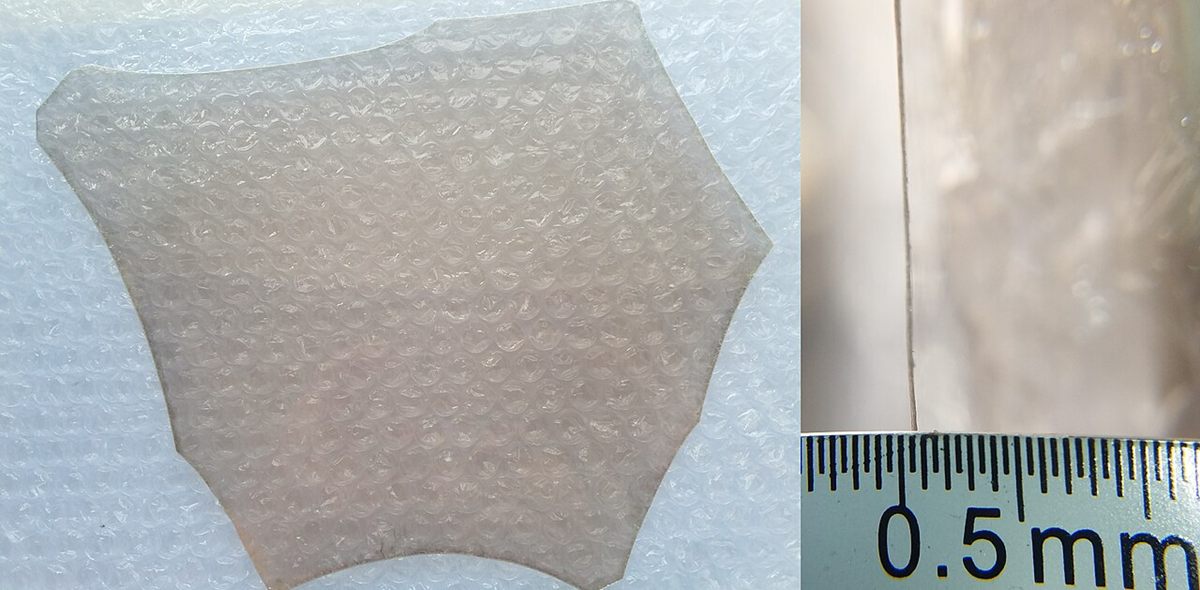
Muscovite, or white mica, is a potassium aluminum sheet silicate, KAl₂(AlSi₃O₁₀)(OH)₂, whose crystals split into thin, flexible, transparent sheets. The name comes from 'Muscovy glass,' the mica from Russia that was once used for windows.
Muscovite, or white mica, is a potassium aluminum sheet silicate, KAl₂(AlSi₃O₁₀)(OH)₂, whose crystals split into thin, flexible, transparent sheets. The name comes from "Muscovy glass," the mica from Russia that was once used for windows.
🪨 Geology Guide Specimen: Open Muscovite (White Mica) in the CRV Science Rock & Mineral ID Guide to log the specimen, compare it with the other 8 mineral classes of Dana / Strunz Classes, and test your eye in LithoClade.
Perfect Cleavage: Why Does It Peel into Sheets?
Muscovite's atoms are arranged in layers held together by weak potassium bonds, so the crystal splits easily into thin elastic sheets that spring back when bent. Its hardness is only 2 to 2.5, and the sheets have a pearly, silvery luster.
Occurrence: Where Does Muscovite Form?
Muscovite is common in granite and especially in pegmatite, where it grows into "books" many centimeters across. It is also a main mineral of phyllite and mica schists such as garnet muscovite schist, where it gives the sheen.
Uses: What Is Mica Good For?
Mica is an excellent electrical and thermal insulator, so sheets have been used in capacitors, electronics and heaters. Ground mica is used in paint, cosmetics for shimmer, and drilling fluids. See aluminum for one of its elements.
Muscovite at a Glance
| Property | Value |
|---|---|
| Type / variety | KAl₂(AlSi₃O₁₀)(OH)₂ • Monoclinic Phyllosilicate |
| Composition | KAl₂(AlSi₃O₁₀)(OH)₂ (Potassium Aluminum Hydrous Sheet Lattice) |
| Geology Guide group | Minerals (8 Major Chemical Groups) |
| Mineral Group | Silicates |
| Mohs hardness | Mohs 2–2.5 |
| Texture / habit | Stacked pseudo-hexagonal 'books' that peel into paper-thin transparent sheets |
| Density | 2.77–2.88 g/cm³ |
| Lustre and cleavage | Pearly, silvery lustre with perfect 1-directional basal cleavage and elastic flex |
| Geological setting | Granitic pegmatites, granites, phyllites, and medium-grade schists |
| Diagnostic feature (Geology Guide) | Silvery, pearly 'books' of crystals (Mohs 2.5) with such perfect one-directional basal cleavage that they peel into transparent, flexible sheets that spring elastically back into shape when bent. |
| Formula | KAl₂(AlSi₃O₁₀)(OH)₂ |
| Cleavage | Perfect in one direction |